The Neutral Evil’s Guide to Digital Marketing

Part three of my alignment-chart series, and the last for now. If you need a palate cleanser afterward, try Lawful Good or Chaotic Good.
Sequel time. Back in 2022 I wrote The Chaotic Neutral’s Guide to Digital Marketing, a guide to doing marketing by accident, which is a subject I’m extremely qualified in. This is the next square on the alignment chart.
Neutral Evil. No loyalty to chaos, no loyalty to rules, no loyalty to you. Just whatever works for them. Picture a pro wrestling heel who doesn’t care if you boo, as long as the merch table does numbers.
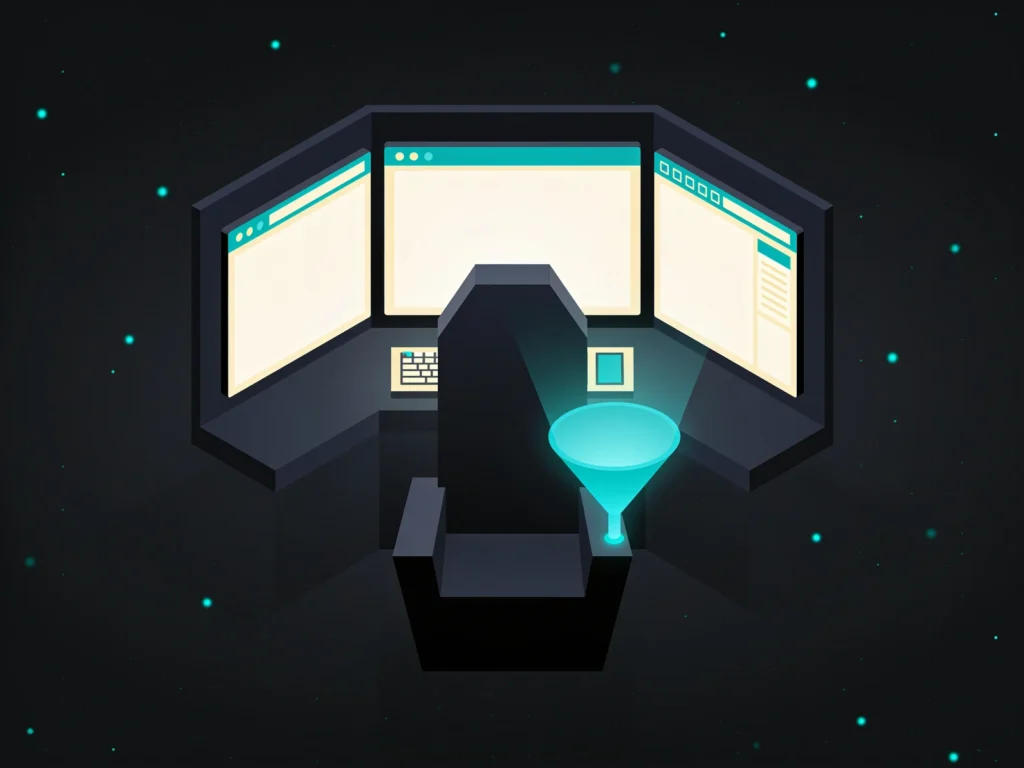
Now picture the villain’s lair. It’s a coworking space. The throne is an ergonomic chair with a 4.2-star rating. On the wall there’s a countdown timer, and it says 04:59:59. It has said that since Tuesday.

(Editor’s note: Alex, you cannot be Neutral Evil. You say “sorry” to furniture. Also, tactics never replace an actual strategy.) — Alex (the other one)
Before we start, some ground rules, because I like having a business. Everything below that names a company is my opinion, and I’ve linked it to something public. Where it’s an allegation, I’ll say “alleged.” Where a court decided something, I’ll say that too.
Also, a confession: DigiSavvy builds on MemberPress, which Awesome Motive lists among its investments, and MemberPress has been kind enough to feature us. I’m about to write about Awesome Motive. It’s like reviewing the restaurant that’s catering your wedding. Yes, that’s awkward. I’m doing it anyway, politely.
1. Let the robots write 4,000 pages by lunch
The Neutral Evil marketer knows a language model can write a page called “Best Plumber in [CITY]” for every city in America before the coffee cools. Ten thousand pages. Same bones, swap the nouns. Nobody has to read them. They aren’t for people. They’re for a crawler.

Net Result: Google has a name for this, and it isn’t “growth.” Its spam policies call it scaled content abuse: lots of pages made mainly to manipulate search rankings instead of helping people. Google says that applies whether the pages come from automation, humans, or both, and it announced the policy in March 2024.
I use AI every day (we say so on our AI disclosure page). The version that works: let the machine do the first draft and the boring parts, put a human who knows the topic in front of every page, and publish fewer of them. I wrote about getting cited by AI answers, and the short version is “be worth citing.”
2. Turn the admin dashboard into a billboard
Why wait for people to find your pricing page when they log into your free plugin every day? Put a banner at the top. Another one under it. A “You’re missing out!” widget. A notice that dismisses itself and returns on Thursday, like a cat with a grievance.
I hate this enough that I once wrote a whole post about hiding admin notices. And here’s where I name names, gently.
Awesome Motive is the company behind WPForms, OptinMonster, MonsterInsights, AIOSEO and a long list of plugins people rely on. In 2021, WP Tavern wrote that the company “has been known for its aggressive sales tactics and upsells in the WordPress admin.” To me, that matches what a lot of us see when we open a free plugin’s screen.
The WordPress.org plugin guidelines set the bar: plugins shouldn’t “hijack the admin dashboard,” upgrade prompts must be “limited in scope and used sparingly,” and site-wide notices must be dismissible. I’m not saying any specific plugin breaks that rule. I’m saying it’s the bar, and I think we should all hold our own dashboards up against it.
Their side, and it’s a fair one: these are widely used, well-supported products, and a free version has to get paid for somehow. WordPress writer Matt Medeiros, who disclosed that his day job is at Gravity Forms (a competitor), wrote in 2023 that cross-selling into their existing brands is “part of a specific formula to grow the company.” Formulas work. That’s why we’re here.
Net Result: A plugin that acts like a pop-up ad teaches users to ignore every notice, including the one that says the site is on fire. The version that works: one upgrade prompt, on your own settings page, where someone is already deciding. Dismissible. Once.
3. Run a sale that never ends
Today only! Ends at midnight! Only 3 seats left! And at 12:01 it’s “today only” again. People have been yelling “But wait, there’s more!” at television sets since before I could ride a bike. The internet’s contribution was adding a clock.
Medeiros made the same observation in that 2023 piece: seeing “a limited time discount or nagging banner will be part of the Awesome Motive brand experience, for better or worse.” He also said flash sales and countdown timers don’t bother him much, so take that for what it’s worth. I’ll offer my own opinion: a discount that’s always on isn’t a discount. It’s the price wearing a costume.
Net Result: The FTC has flagged countdown timers that make people believe an offer is time-limited “when the offer is not actually time-limited” as a dark pattern. I’m not saying anyone’s clock is fake. I’m saying a clock should tell the truth. Run a real sale with a real end date once or twice a year, and mean it. Or charge the real price and skip the costume. (The timer in my lair just reset.)
4. Gate the reviews
“How was your experience?” Five stars? Here’s a link to Google. Anything less? Here’s a private form called “Help us improve!” that goes to a mailbox nobody owns. Your public rating is 4.9. Your customer service is a mime.
Net Result: In 2024 the FTC finalized a rule against fake reviews. It bars incentives that depend on a review expressing a particular sentiment, and it bars misrepresenting that the reviews on your site are all or most of the reviews when some were suppressed because of low ratings. I’m not a lawyer, so read the rule. The version that works: ask everyone the same way, send everyone to the same link, and answer the bad ones in public like an adult. A 4.6 you earned beats a 4.9 you built.
5. Buy the thing everyone loves, then charge the people who love it
The cheapest way to get customers is to buy somebody else’s. Find a free product with a loyal following, acquire it, and sprinkle “Upgrade to Pro!” where they look. The loyalty is the asset. You just have to keep it from noticing.
To be clear, acquisitions are normal in WordPress and often good: a solo developer who’s burned out gets a whole team behind their plugin. Awesome Motive has bought many. When it bought Duplicator in January 2023, a 12-year-old freemium plugin with more than 1.5 million users, WP Tavern reported that users could expect no pricing changes, but that “some have already expressed concern about having to put up with Awesome Motive’s trademark aggressive marketing that litters the WordPress admin with ads and upsells.” That’s Tavern’s wording, not mine.
Awesome Motive’s founder and CEO, Syed Balkhi, said in 2021 (about a different deal) that each product team “operates independently” and that no pricing changes were planned. I don’t know what happened to any one plugin’s dashboard after any one sale, and I won’t pretend to.
Net Result: When users feel they were sold along with the product, they leave, and the ones who stay stop trusting the notices. If you buy something people love, keep the thing they loved good and make the paid tier obviously worth it.
6. Sell them the secret “they” don’t want them to know
The guru funnel is, in my opinion, the infomercial that learned to type. Free training. A “secret.” A stack of bonuses. Scarcity. And of course: but wait, there’s more.

If you want Neutral Evil in its purest form, look at the man who turned “they don’t want you to know” into a business: Kevin Trudeau. His record sits in public agency and court documents, so here’s what they say, and nothing else.
In 2004, Trudeau settled FTC charges over infomercial claims for a coral calcium product and a pain-relief strip. He agreed to a broad infomercial ban, with an exception for informational publications, as long as he didn’t misrepresent their contents. In 2007, the FTC alleged he’d broken that order: that infomercials for his weight-loss book described an easy plan you could do at home, while the book itself, the FTC said, described a complicated one. That was an allegation. What came next was a finding. In 2013 a federal jury convicted him of criminal contempt for violating the 2004 order, and the Justice Department announced a 10-year federal sentence. The Seventh Circuit affirmed in 2016.
I’m picking on the tactic, not the guy: the pitch promises the easy version, and the box holds the hard one.
Net Result: A funnel works right up until the product doesn’t match the pitch. Today’s version wears different clothes and uses webinars instead of lasers, but the test is the same. Show the typical result, not the best one. Let people leave. And if your pitch needs “they don’t want you to know,” the product needs a better pitch.
Where this leaves us
Every tactic above works for a while, and every one of them spends trust you can’t print more of. Neutral Evil isn’t scary because it fails fast. It’s scary because it works just long enough to look smart.
I’ll be walking through the rest of the alignment chart, so I may find out which square I end up on. Meanwhile: what’s the worst nag notice you’ve ever dismissed? Tell me. I’ll be here, staring at a timer that says 04:59:59.