I Gave a Bot the Job I Was Bad At

Years ago, I ran a staff of fifteen people without an Integrator.
That meant I had to be the Integrator.
Reader, I was not good at it.
I could set direction, spot opportunities, solve weird problems, and get excited about what we could build next. Then somebody had to turn all of that into priorities, processes, accountability, and a functioning Tuesday afternoon.
Unfortunately, that somebody was also me.
I’ve since read some of Traction and found EOS and its Visionary/Integrator pairing pretty compelling. The Visionary points toward the destination. The Integrator runs the day-to-day business, connects the major functions, and practices LMA: lead, manage, and hold accountable.
I know folks using EOS at their companies, including people at Moxie and the N Squared crew behind Simply Schedule Appointments. I’ve watched smart eggs make this model work.
It also made me wonder: what if the seat I could never properly fill is now, at least partly, a config file?
The seat I could never fill
I installed Grok Bot and started building a small team of persistent bots for DigiSavvy. Five of them are involved in the day-to-day work right now.
This isn’t a pretend executive team where I give every bot a clever title and ask them to debate my business strategy. I wanted actual seats with clear responsibilities and boundaries.
I’m still the Visionary. I’m also the final call.
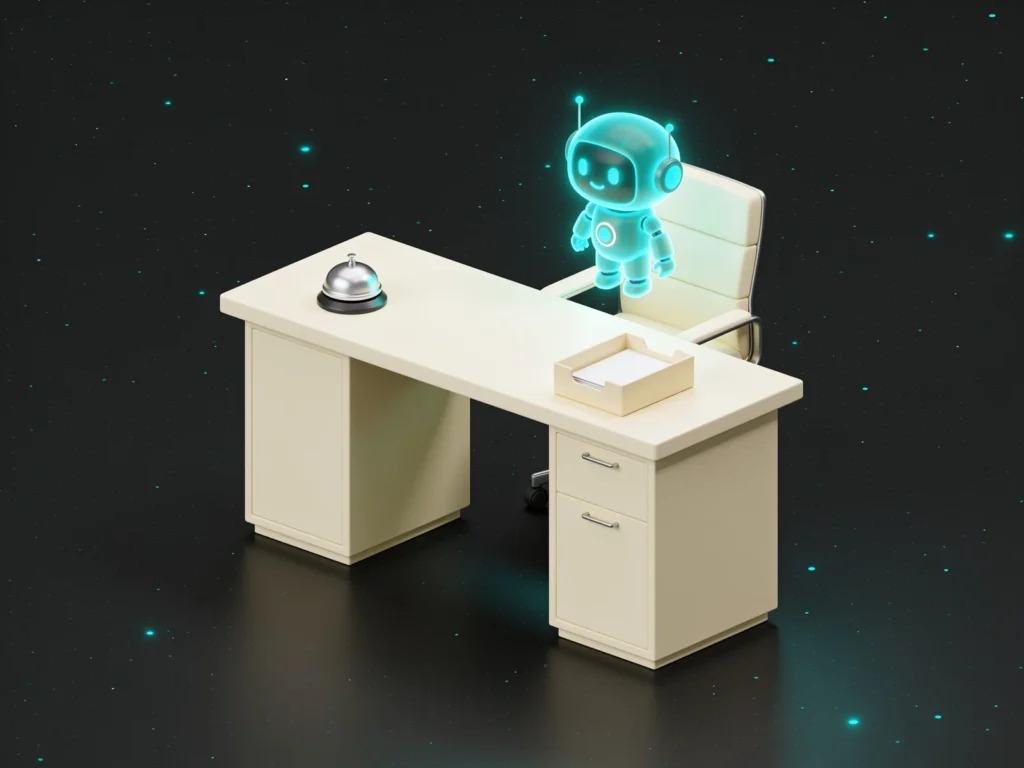
The important addition is an Integrator bot. It acts as the gate, manages the other seats, and handles that lead-manage-accountability function that I historically handled with all the grace of a raccoon sorting silverware.
Here’s the working chart. It includes the specialized seats, not just the bots touching work every single day:
- Alex: Visionary, final call
- Integrator bot: operations, manages the seats, LMA
- PM bot: writes briefs, chases work, checks output against the brief
- Calendar and client-voice bot: scheduling, client-facing email tone
- GitHub/Cursor bot: pull requests
- CLI/app-coding bot: command-line and app work
- WordPress operations bot: WordPress, staging, BlogVault, MainWP
There’s also another bot on the roster that isn’t doing day-to-day client work.
Once I greenlight something, the main production line is Integrator to PM to builder bots. The calendar and client-voice bot deliberately stays off that line. Its job is communication and scheduling, not producing the work.
That separation matters more than I expected.
My inbox became the office
Missive is a collaborative inbox, and it has become the practical hub for this setup. To be very clear, this is wiring I created. It is not an official Grok Bot connector.
One bot holds an actual Google Workspace seat, a Missive license, and a Slack license so it can track Slack activity. That sounds slightly ridiculous when I type it out, but it gives the bot a real place inside the systems where work already arrives.
I can @-mention a bot on an email thread and ask it to action the email or get something started. If I assign an email directly to a bot, it can handle the thread independently. When it needs my judgment, it tags me right there.
The bots can mention me. I can mention them. I can assign work while reading the inbox.
It feels much closer to delegation than copying text into a chat window and hoping I remember why I did it.
This fits how I already think about automations for a small business. The useful stuff usually isn’t flashy. It removes a handoff, keeps context attached, or stops a small task from vanishing into the fog.
I also created agent inboxes using Cloudflare Email Routing. Those addresses gave me another lane for communicating with the Grok Bot team. They mattered more before the Android app arrived, but I still think they’re useful.
A tiny support ticket, independently handled
Just a few days ago, my business had its first fully independent bot triage of a support ticket.
Was it some enormous, business-altering milestone? Nope.
Did I still have a moment where I stared at the thread and thought, “Oh shit, it actually did the thing”? Absolutely.
A support request arrived. The bot triaged it without requiring me to carry the task through every handoff. That’s small, but it’s real.
I care about that distinction. Plenty of AI demonstrations look great because somebody has carefully arranged the prompt, the input, and the desired outcome. A support inbox is messier. People write like people. Context is scattered. The request may not even describe the real problem.
The ticket was also low stakes, by design.
I’m not handing over everything and heading to lunch.
The 90% rule
Work proceeds only when the team has 90% confidence about what needs to happen, understands the scope, and believes the task is feasibly doable.
If it doesn’t meet that threshold, it comes back to me.
The rule exists because I do not fully trust this setup yet. I think that’s healthy. Confidence should come from repeated evidence, not from how impressive the software looks during setup.
The clearest boundary is coding. My Claude agents still handle direct, serious coding. If you know anything about my Claude and over-engineering habits, this probably won’t surprise you.
The Grok Bot team is currently relegated to minor coding, WordPress triage, and updates. One bot runs WordPress updates once per week.
For a WordPress fix, the bots use BlogVault to create a staging copy. They implement the fix there, send me screenshots, and wait for review. Nothing gets deployed to the live site until I approve it. The WordPress operations seat also works with MainWP for the site-management side.
That’s less exciting than “AI runs my agency.”
It’s also closer to the truth.
Teaching operations to speak human
The Integrator bot has made a difference, but it didn’t arrive fully baked.
I researched the Integrator role and created a fairly extensive skill and instruction set to house it. When I have a process question, I go back and forth with the bot until we reach something that makes sense for the way I actually work.
At first, it leaned heavily on operations jargon. I don’t talk that way, and jargon doesn’t become useful just because a bot says it with confidence.
So I’ve had to sand that down.
I want it to help me define ownership, next actions, and acceptable output. I don’t need every conversation to sound like an off-site meeting conducted entirely through acronyms.
Slowly, repeatable processes are accumulating. That may be the most valuable part of this experiment. A question turns into a conversation. The conversation becomes an instruction. The instruction becomes part of how the team handles the next similar situation.
It reminds me of building little internal apps that solve specific problems. Each individual improvement can look almost too small to mention. After enough of them, though, the business behaves differently.
Almost.
Where it still gets annoying
The tooling Grok Bot supports out of the box has mostly been easy to wire up.
Anything unsupported is a chore.
It’s doable, but a chore is still a chore. You have to decide whether an integration is worth the setup time, whether the bot needs that access, and how much babysitting the connection will require. Sometimes the answer is yes. Sometimes I realize I’m building plumbing for a workflow that barely deserves a faucet.
There are other limitations too. The operations language needed tuning. The coding boundary remains firm. The 90% rule sends uncertain work back to me. I still review screenshots before a WordPress fix goes live.
None of this is perfect.
And no, it hasn’t transformed DigiSavvy overnight. The stakes are intentionally low while I learn what these bots are actually dependable at.
But the support ticket got triaged. Updates are running. Work can move from an Integrator to a PM to a builder with a written brief and a review step. Delegation is visible in the same inbox where I’m already working.
So far, so good.
I’m curious whether anyone else has tried giving a bot the Integrator seat. Not merely a task list or a chat prompt, but the actual responsibility for helping work move through the business.
If you have, I’d love to hear what worked, what got weird, and what you took back from the bot after trying it.