
Automations that quietly save us a day a week

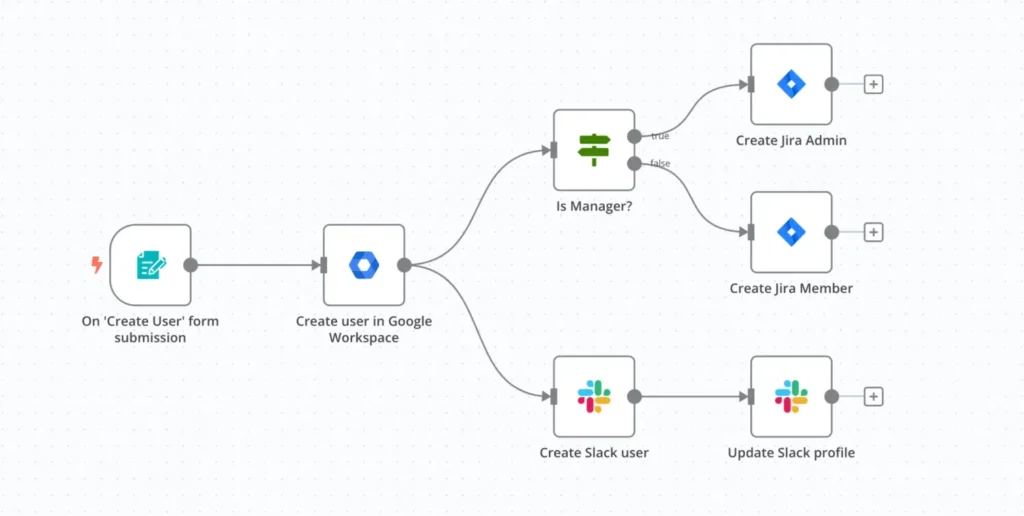
Automation content tends to come in two flavors: breathless AI futurism, or sixty-tool listicles written by people who’ve clearly never run a business. This is neither. These are actual automations we run — for ourselves and for clients — each one small, boring, and quietly returning hours every single week. Individually none of them is impressive. Together they add up to roughly a working day, every week, forever.
1. Lead intake that qualifies itself
When someone inquires through our site, automation does the first hour of sales admin before a human looks: the lead is scored and triaged, a recap lands in our inbox with the verdict attached, qualified prospects get a booking link immediately, and everything is logged to the CRM with the context intact. Replaces: reading, evaluating, and answering every inquiry by hand — including the ones that were never going anywhere. The prospect gets an answer in minutes instead of days, which they read as professionalism. It’s just plumbing.
2. Follow-ups that never forget
Every lead that doesn’t book gets a short, human-sounding follow-up sequence — value first, check-in second, graceful close third. Replaces: the mental load of remembering who to nudge, and the revenue lost because nobody did. The dirty secret of follow-up is that the second touch closes a meaningful share of deals and almost no one reliably sends it. Machines are unbeatable at reliably.
3. New-client onboarding as a chain reaction
Proposal accepted → contract goes out for signature → signature triggers the invoice → payment creates the project space, the shared folder, the kickoff scheduler, and the welcome email with everything the client needs. Five tools, zero humans, maybe ninety seconds of total machine time. Replaces: two-ish hours of setup admin per client and — more valuable — the inconsistency. Every client now gets the same crisp first week, including the ones who sign on a Friday at 6pm.
4. The robot that watches the websites
Uptime, errors, security scans, backup confirmations across every site we care for — all feeding one channel, with humans paged only when something needs a human. Replaces: manually checking dashboards, or worse, finding out from customers. This one isn’t even about saved time so much as bought certainty: the difference between believing the sites are fine and knowing.
5. Reporting that writes its own first draft
Monthly client summaries start as auto-pulled data — uptime, updates shipped, traffic notes, work completed — formatted into a draft a human polishes in minutes. Replaces: the half-day of copy-paste that used to make reporting week a dread, and the temptation to skip reporting entirely (the actual outcome at most agencies). Clients read them because they arrive on time and say something.
6 & 7. The revenue pair: carts and re-engagement
For commerce clients, two sequences run forever: abandoned-cart recovery (the single highest-ROI automation in e-commerce, full stop) and behavior-based re-engagement — customers who go quiet get a nudge, loyal ones get rewarded, the truly gone get cleaned off the list so deliverability stays healthy. Replaces: revenue nobody was going to chase manually. This pair did heavy lifting in the Jacket Society +30% story, and it’s the first thing we wire for any store. (If you have an email list and none of this running, you don’t need a new CRM — you need wiring.)
What we deliberately keep human
Equal time for the other list — the things we’ve chosen never to automate, because the judgment is the value. Pricing conversations: a quote is a promise, and promises get made by people who’ll keep them. Apologies and bad news: nothing torches trust like a templated mea culpa. Design feedback and strategy calls: pattern-matching a business’s actual situation is the part clients are paying for. And the final read on anything customer-facing — automation drafts, humans ship.
The dividing line isn’t effort; it’s consequence-of-being-wrong. A misfired follow-up email costs nothing. A misjudged scope, a tone-deaf reply to an angry customer, a strategy built on autopilot — those compound. Automate the frequent and reversible, keep humans on the rare and expensive, and the day a week you save funds the judgment hours that actually grow the business.
The pattern, if you want to copy it
Look at the shape of the list: no AI agents running the company, no platform migrations, no tool worship. Every entry is the same move — find a task that is frequent, rule-based, and boring, and hand it to a machine that never gets tired of it. Humans keep the judgment calls; machines keep the calendar. Start with whichever task made you wince with recognition while reading, automate just that one, and add the next when the first feels invisible.
Or skip the trial and error: this is literally our day job. The marketing automation practice builds the revenue-side machinery, our AI & workflows work covers the operational rest, and a free systems review will tell you which automation pays for itself first in your specific business. Hint: it’s almost always the follow-ups.